
Behavioral Economics in Event Ticket Pricing
Pricing a ticket is not merely a financial decision—it is an exercise in psychology. Behavioral economics has identified numerous mechanisms that shape how people perceive value, and event organizers leverage these principles, often without attendees even realizing it.
Anchoring is perhaps the best-known principle. When a higher ‘regular’ price is presented alongside a discounted early bird rate, the brain uses the higher price as a reference point, making the lower price appear significantly more attractive, regardless of whether the original price truly reflects market value.
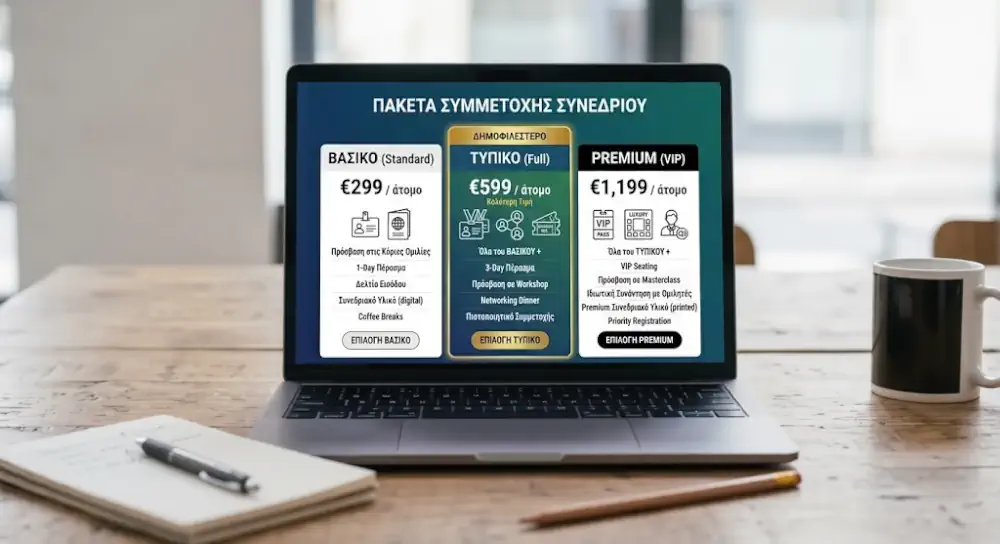
Decoy pricing frequently appears in three-tier ticket packages such as Basic, Standard, and Premium. The Standard option is typically positioned to deliver exceptional perceived value compared to Premium, steering most buyers toward the middle option, which is often the organizer’s most profitable choice. In this model, Premium serves primarily as a reference point rather than a realistic option for the majority of attendees.
Scarcity—the perception of limited availability—immediately creates a sense of urgency. Messages such as ‘Only 15 early bird tickets remaining’ reinforce the idea that delaying a purchase comes at a cost, a tactic proven to accelerate buying decisions even when actual availability may be higher.
Loss aversion is equally powerful. A message stating ‘The early bird price expires in 48 hours’ does not simply promote a discount—it emphasizes avoiding a loss, which is psychologically far more persuasive than highlighting a comparable gain.
Finally, the framing effect concerns how the very same price is presented. A €300 ticket described as ‘less than €1 per hour for two days of content’ is perceived very differently from the identical price presented as a single upfront payment, despite the total cost remaining exactly the same.
Using these techniques is not about manipulation; it is about communicating value effectively. Even an outstanding event can lose attendees if its pricing is presented poorly, whereas a well-designed pricing structure can increase both revenue and attendee satisfaction by reinforcing the feeling that they made a smart purchasing decision.