
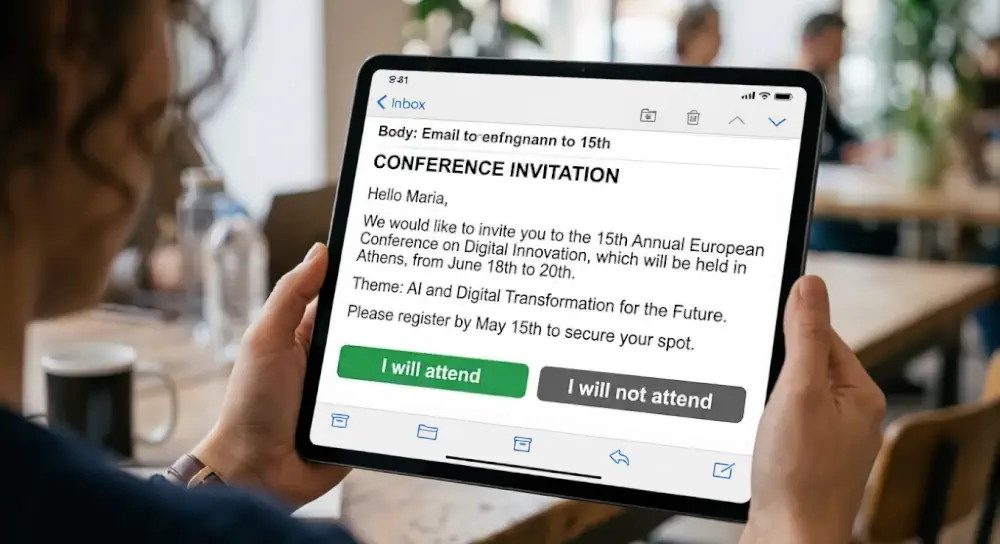
The Psychology of RSVP: Why We Delay Responding
Every event organizer has experienced the same scenario: the invitation has been sent, the event date is approaching, yet the RSVP rate remains disappointingly low. This is rarely a sign of lack of interest. Instead, it is driven by well-established psychological mechanisms that shape how people make decisions about the future.
One of the primary factors is decision fatigue. An RSVP requires recipients to anticipate their future schedule, evaluate priorities that have not yet taken shape, and publicly commit to a choice. The further away the event is, the more abstract the decision becomes—and the easier it is to postpone. Our brains naturally prioritize tasks requiring immediate action, while an invitation without a clear deadline is easily pushed aside.
Uncertainty about the future is another major factor. Many people delay their RSVP not because they are unwilling to attend, but because they are unsure whether they will be able to. They prefer to keep their options open for as long as possible. This reflects the concept of optionality bias, where preserving flexibility feels more valuable than making a commitment, even when it makes little practical difference.
Social proof is one of the most powerful tools event organizers can use to reverse this trend. When recipients see that colleagues or peers have already confirmed their attendance, their mindset shifts from ‘I’ll attend if I can’ to ‘Everyone is going—I should be there too.’ A simple message such as ‘120 attendees have already confirmed’ on the registration page can significantly improve response rates.
Loss framing is equally important. Rather than emphasizing what attendees will gain by participating, it is often more effective to highlight what they will miss by failing to respond on time: limited availability, an expiring early bird offer, or exclusive content reserved for confirmed attendees. Psychologically, losses carry greater weight than equivalent gains, making this asymmetry a powerful driver in any RSVP campaign.
Finally, reminders should never be treated as simple repetitions of the original invitation. Behavioral economics research shows they become far more effective when they introduce new context. A reminder stating ’48 hours remaining’ carries far greater psychological impact than merely resending the initial invitation. Combining a clear deadline, social proof, and effective loss framing transforms the RSVP from an abstract future task into an immediate decision.
By understanding these behavioral mechanisms, organizers can move beyond simply sending more emails and instead design an RSVP journey that aligns with the way people actually make decisions.